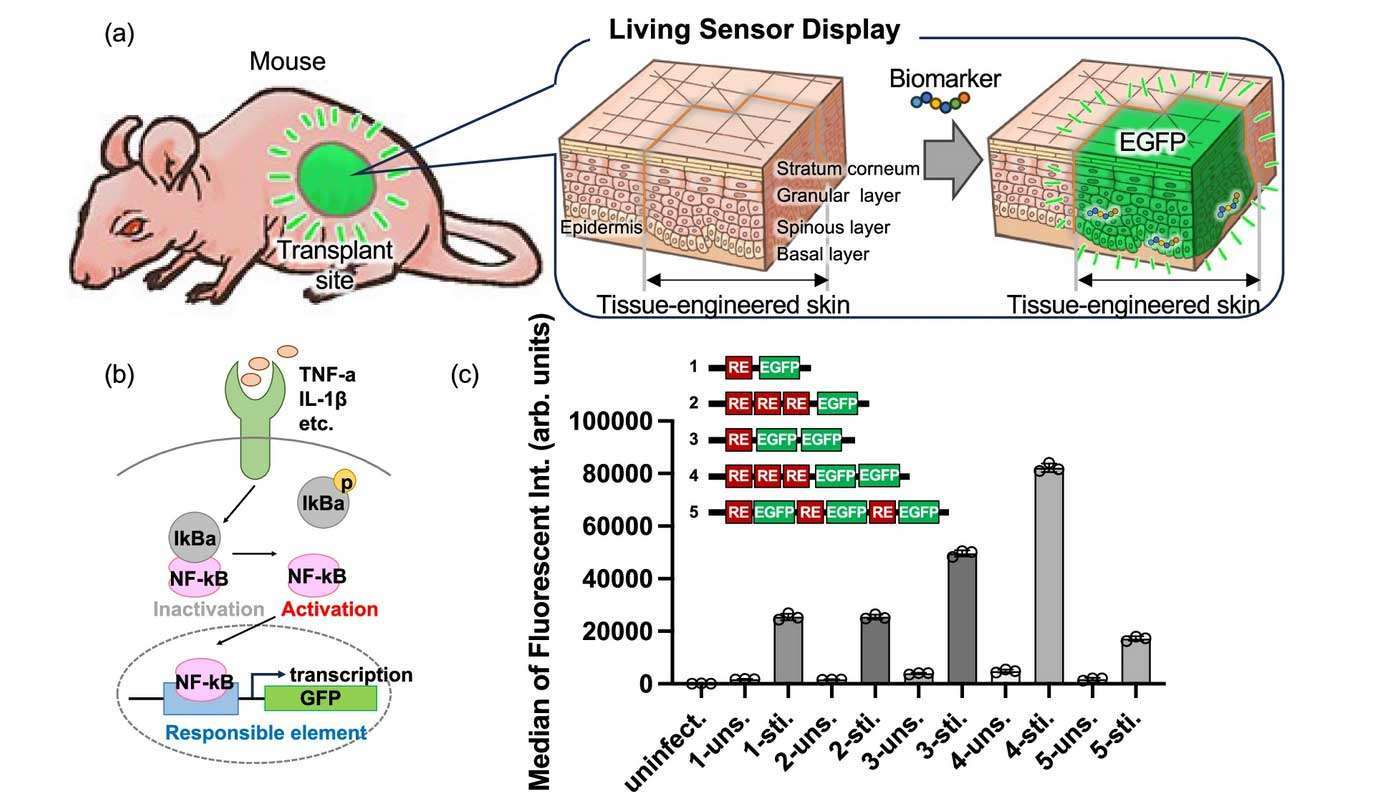
This study introduces an approach to biomarker monitoring through the development of a “Living Sensor Display” implanted on the skin, designed for long-term, continuous tracking of biomarkers, such as inflammatory cytokines. By leveraging the natural high selectivity and sensitivity of keratinocyte stem cells (KSCs) to environmental stimuli, we genetically engineered these cells to express fluorescent proteins in response to specific biomarker signals, specifically TNF-α signalling. This innovation allows for the real-time, non-invasive observation, with the only invasive step being the initial implantation, of biomarker levels directly from the skin surface. We constructed tissue-engineered skin with genetically modified KSCs and transplanted it onto mice, where it successfully engrafted long-term, matured to mimic human skin structures, and responsively indicated the presence of TNF-α through visible fluorescence. This living sensor could repeatedly detect inflammatory responses induced by TNF-α and lipopolysaccharides, highlighting its potential for monitoring various physiological and pathological processes over extended periods. This Living sensor display holds promise for advancing health monitoring and disease prevention strategies by enabling continuous, sensitive, and specific in vivo biomarker tracking.
Living sensor display implanted on skin for long-term biomarker monitoring